
Silent Winter is out now, and it seems a good moment to say something about what kind of book it is, and about the world from which it comes.
This is not a story built around spectacle. It was written as a story of pressure: cold pressure, hunger pressure, social pressure, and the slow tightening pressure that comes when a fragile community realises too late that winter is going to ask more of it than it wanted to give. In its opening movements, the book is concerned not with grand declarations, but with stores, weather, roads, silence, animals, judgement, and the consequences of men choosing comfort over preparation.
That was the intention from the start. I did not want a softened “dark age” backdrop where hardship exists only as atmosphere. I wanted winter to behave like a real force in the story: not a bit of scenery, but a condition that shapes thought, conduct, hierarchy, and survival. In Silent Winter, the season is not merely cold. It governs decisions. It exposes weak judgement. It narrows margins. It turns mistakes into costs that cannot easily be paid back.
Just as important, I wanted Edrass itself to feel like a place that had come into being for reasons.
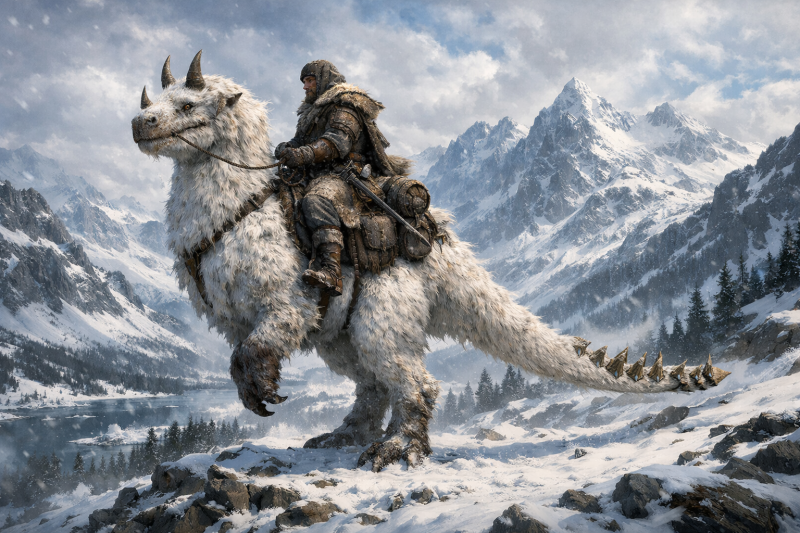
Edrass is not an idea I arrived at by deciding to take a recognisable historical culture, add an unusual animal, and call that worldbuilding. It was not built as “Anglo-Saxons riding giant ostriches”, however easy that kind of summary might be from the outside. Edrass is a region within Yerp, and Yerp is part of the wider world of Panimaláy. That larger setting was built methodically: through climate, geography, movement, subsistence, pressure, and the practical consequences of how people survive in particular kinds of land. Edrass emerged from that larger process.
That matters to me because it changes what the society is. The people, customs, institutions, and habits of Edrass are not decorative choices laid on top of a neutral map. They are the result of a region developing under particular conditions. The land shapes travel. The climate shapes food, storage, and risk. The distances between places shape politics and obligation. The available animals shape movement, war, labour, and status. Over time, those things produce forms of life. They produce customs, expectations, and ways of reading danger. They produce culture.
The Arrasses are a good example of that. They are not there because I wanted something visually eccentric. They are part of the ecological and practical logic of the region. Once the wider world is built properly, once terrain, climate, and patterns of movement are taken seriously, the animals that matter to a people matter in deep ways. They affect patrol, communication, warfare, labour, rhythm, and even perception. In *Silent Winter*, they are not a novelty. They are simply part of how this world works.
The same applies to violence. What interested me was not clean heroism, but the way threat enters a community through signs that attentive people notice before anyone else wants to believe them. A silent steading. An open gate. Brushed tracks. A shut door. A house that feels used rather than lived in. A surviving pup hidden under wood. These are small things, but they are the kind of small things on which life and death often turn. The novel’s violence is meant to feel deliberate, practical, and human rather than theatrical. It comes with stain, aftermath, and memory attached.
That, in turn, feeds into the question of leadership. One of the things that matters most to me in this book is that authority is not abstract. It is not pageantry. It is not the luxury of issuing commands from a safe distance. It is practical, local, and burdensome. Harvald is not presented as a grand ruler in the epic sense. He is a man responsible for stores, people, timing, risk, kin tensions, and survival through a hard season. The book keeps returning to that sort of leadership: not the leadership of speech, but the leadership of being right when it matters, preparing when others hesitate, and carrying responsibility without the comfort of certainty.
Isenwynn’s place in all this matters as well. Silent Winter is set before the legend. It stands at the point before the figure later remembered in history has become what history will make of him. In this first book, he is still learning how to see: to read signs, to read men, to understand duty, and to grasp that a settlement or a hold can be damaged not only by open enemies but by pride, misjudgement, and the failure to act in time.
That larger interest in organic development is central to Panimaláy as a whole. I have always been less interested in invented worlds that are assembled from striking images than in worlds that feel as though they could have grown. A convincing setting, to my mind, is one where everything presses on everything else: landscape on movement, movement on trade, trade on power, power on custom, custom on law, law on survival. The details need weight. If there are stores, they should matter. If there are hounds, they should matter. If winter is coming, then fodder, sickness, fuel, fear, and the condition of the roads should matter as well.
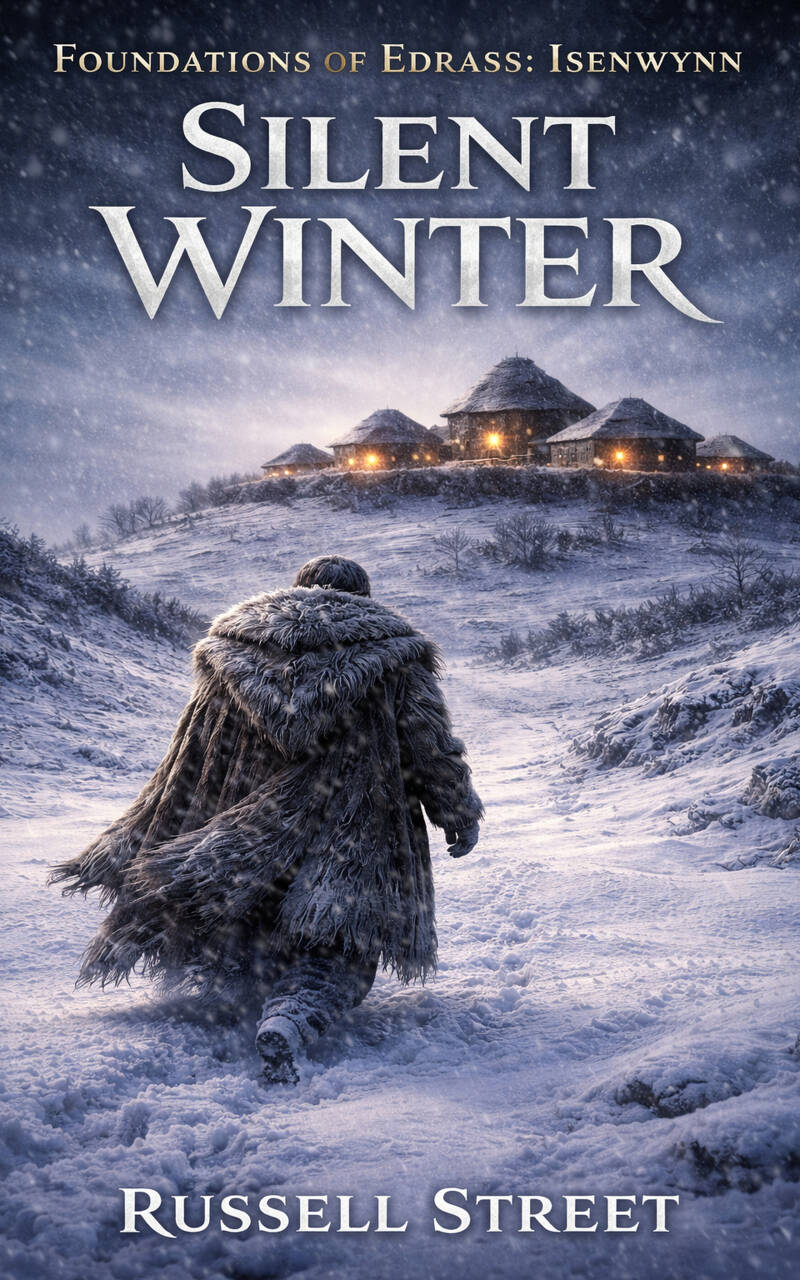
That is the spirit in which Silent Winter was written. It is not a book about a premise. It is a book about a place, and about the kinds of people a place like that might produce under strain.
That is also why it belongs naturally with the sort of things I write about here. The Russell Street Press site is the more official home for the books themselves. The Cellar Dweller is a better place for the longer thoughts behind them: why a story took the shape it did, what sort of history fed into it, what methods underlie the worldbuilding, and how the wider setting is being built piece by piece around the fiction.
So this post is partly a marker. Silent Winter is now out in the world. But it is also a statement of intent. The work I am most interested in doing, both in fiction and in worldbuilding more broadly, is work with weight in it: places shaped by climate and labour, communities shaped by pressure, cultures shaped by memory, and stories in which consequence is allowed to remain consequence.
For now, though, it is enough to say that Silent Winter is published, and I am very glad to have it there.
Add comment
Comments