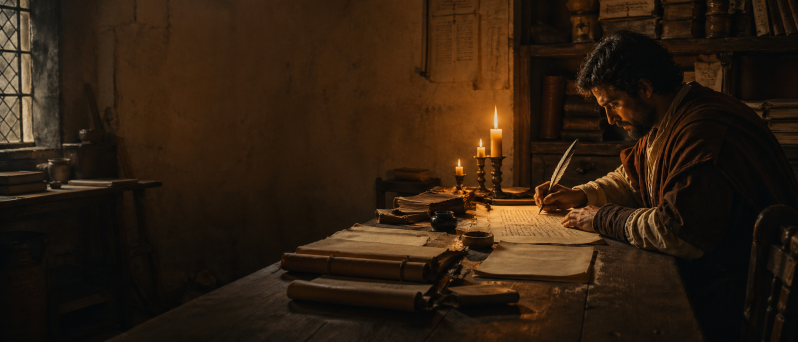
I have been creating worlds for as long as I can remember. That sounds rather grand, but it began simply enough. Like many private habits, it was not originally meant to become anything public. It was something done because it was interesting.
Maps, histories, armies, peoples, borders, old grudges, lost cities, river valleys, trade routes, religions, wars, names, customs — all the machinery that makes an imagined world feel as if it existed before the story arrived.
Panimálay began, in part, as a wargaming world.
More precisely, it grew from the wargaming idea of “Imagi-Nations”: fictional countries, armies and campaigns built with enough internal logic to feel as if they might have existed. I first came to that idea through Henry Hyde, again of Battlegames magazine, whose work helped show how much more interesting wargaming becomes when battles belong to a wider political, geographical and historical setting.
That appealed to me immediately.
A battle is never just a battle if it is taken seriously. It sits in a landscape. Armies have to move through that landscape. They need food, roads, animals, weather, rivers, ports, winter quarters and reasons to fight. Once those questions are asked, the world begins to grow beyond the table.
A campaign map becomes a continent. A continent requires climate. Climate shapes land use. Land use shapes settlement. Settlement shapes law, wealth, warfare, religion and memory. Before long, what began as a practical setting for battles has become something much larger.
That is what happened with Panimálay. It got a life of its own.
My interest in history fed that process. I have always been drawn to the ancient world and the early medieval period: Rome, Greece, Persia, Phoenicia, the dark-age kingdoms of Europe, the hard edges of frontier societies, and the way peoples survive, fracture, trade, conquer, adapt and remember themselves.
Not the polished version of history, but the practical one.
The history of roads and grain. Of winter and taxes. Of ships, horses, walls, faith, law, inheritance and fear.
Those things are not background details to me. They are the substance of the world.
A culture is not believable because it has a few invented names and a flag. It becomes believable when it has reasons. Why do people live there? What do they eat? What do they fear? How do they travel? Who protects them? Who takes from them? What do they believe happens when they die? What stories do they tell about their ancestors? What do they do when winter lasts too long?
Those are the questions that interest me.
For a long time, all of this remained private. It was worldbuilding for its own sake, and for games. I had always done that. I built places, histories, cultures and conflicts because I enjoyed it, and because role-playing and wargaming both need worlds that feel as if they can hold real choices.
Then my wife asked the question that changed it.
I spent so much time, effort and money on all this material — maps, histories, cultures, climates, wars, peoples, religions, languages, animals, landscapes — that she quite reasonably asked what the point of it all was if it stayed in my own head and files.
Why not write stories set there?
After all, I already created worlds for role-playing. I already built places so other people could enter them, act within them, and see what happened. So why not do the same with Panimálay? Why not write stories about the place, and let others see at least part of what had been built?
That was the real beginning.
Not a marketing plan. Not a grand career decision. Not even, at first, a publishing strategy. Just the simple realisation that a world I had spent years building did not have to remain private.
The stories became the way to open the door.
I am not a graphic artist. Producing beautiful fantasy maps was never going to be the natural route for me. I admire people who can do that, but it is not where my strengths lie. My maps are tools before they are artwork. They exist to show coastlines, mountains, rivers, weather, routes and political pressure.
Fiction became the better way in.
A reader does not need to begin with a climate model, a language tree or a constitutional structure. They can begin with a boy in winter. A hall under pressure. A road that may not be safe. A leader making a hard decision with too little information. A community trying to survive the season.
That is how Silent Winter emerged from the wider world of Panimálay.
Edrass was not invented as a surface idea. It was not built around a gimmick. It came out of geography, climate, isolation, pressure, animal life, social organisation and the long development of a people living in a hard northern region.
Once those foundations were in place, the story found its shape.
The winter mattered. The animals mattered. The stores mattered. The silence mattered. Leadership was not a heroic pose; it was a burden carried in bad weather among people who might die if judgement failed.
That is the kind of story I wanted to write.
Not spectacle for its own sake. Not fantasy as decoration. Not a world where things exist only because they look interesting. I wanted to write stories where the imagined place has weight. Where culture grows from the land. Where belief has social force. Where law and hunger and weather matter.
Where people are shaped by the world they inhabit, and where the world feels old enough to have produced them.
Writing the books was therefore not a sudden change of direction. It was the natural next step.
The world had already been growing for years. The histories were there. The regions were forming. The cultures had begun to argue with one another. The landscapes had pressure in them. What the world needed was not another private note, but a door.
The books are that door. They let the world be encountered through people rather than diagrams: through danger, action, fear, loyalty, mistake, duty and consequence. They allow Panimálay to become more than a setting in my own head — but a place someone else might walk through for a while.
That, in the end, is why I started writing the books and created Russell Street Press. My wife was right. There was a point to all of it, but only if I let other people see it.
Add comment
Comments